

Enter the Dream Time

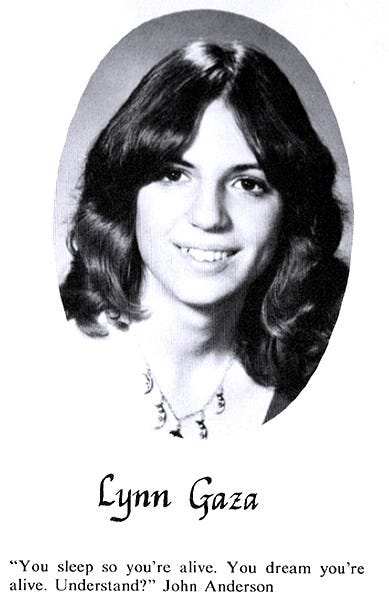
I've always been attracted to the world of dreams. In my high school yearbook, everyone put a quote next to their picture. Mine was, "You sleep so you're alive. You dream you're alive. Understand?". It was attributed to Jon Anderson the falsetto prog rocker from the band Yes. Now 80 years old, and still rocking in the dream world, his latest vision quest called "Once Upon a Dream", was released on my birthday last year (I had no idea) and clocks in at 16 minutes of free associating mystical dream imagery. If you make it to the end, extra credit!
In my senior year of high school, I had to write a research paper on a subject of my choice, and I chose to write about the science of dreams. This ended up being somewhat disappointing, since what I learned was that in spite of all the mystique about dreams, many scientists believe that dreams are basically a brain fart that our waking minds use to cleanse the mental palate, or a filing cabinet to process emotions. I decided it didn't really matter what dreams are, and that the art and culture around them was much more interesting than the science. The melting clocks of Salvador Dali and the movies of Vincent Price were more interesting to me.
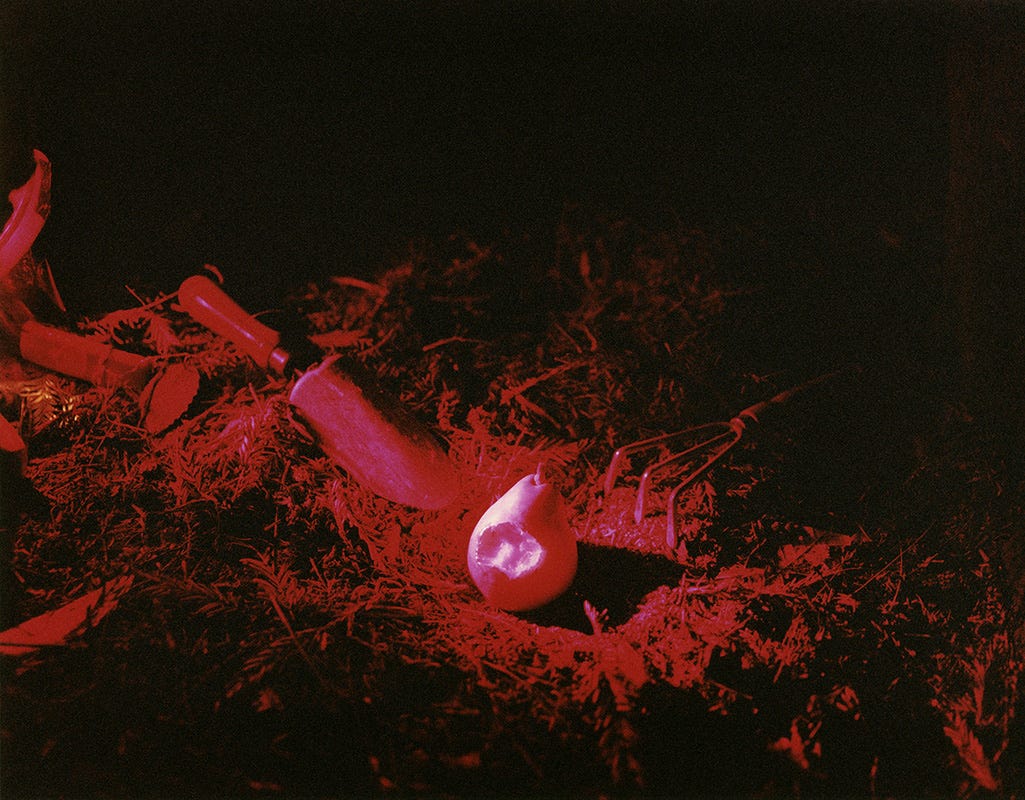
My interest in dreams led me to Carl Jung's Man and His Symbols and his work with visual symbolism. Although I didn't always agree with or understand his analysis, I was inspired by the concept that emotions and memories are hidden within the images of our dreams. To uncover this world hidden in plain sight became one of my primary photographic objectives. These efforts can be seen in my early black and white experiments with projection, where I superimposed dream-like visions on abandoned locations. I continued to pursue this direction with my plastic camera work, letting the outcome be guided by intuition more than intention.
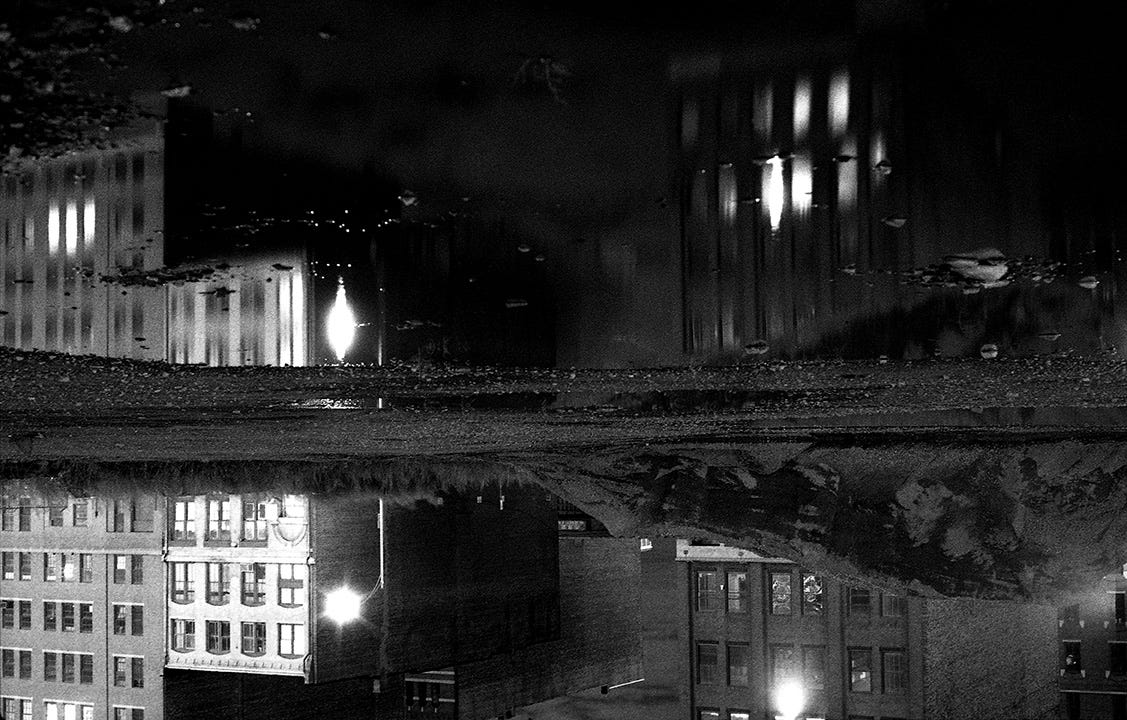
Another connection point was the Aboriginal belief known as The Dreamtime or The Dreaming, which I first encountered through the Peter Weir movie, The Last Wave. The movie is a mind bending odyssey taken by Richard Chamberlain through a parallel world in 1970's Sydney, where the music and prophesies of the Mulkurul reveal knowledge of an impending cataclysm. The idea of a world perched in the shadows of our waking world, similar but with an entirely different meaning, was something I searched for with photography. When I went out to shoot in the deserted areas of Boston at night, I used my camera as a divination tool, searching for the threads connecting the waking world with the dream world, the world of the past with the world of the present.
Photography is a representative art form, but experiments in the darkroom allowed me to play with perceptions of reality. Sometimes, there was no negative at all, just objects exposed on paper, or my own body laid down to create an impression, or an oatmeal box to create a pinhole camera. These experimental processes freed me from the reality I saw through my camera and challenged me to look at things differently.
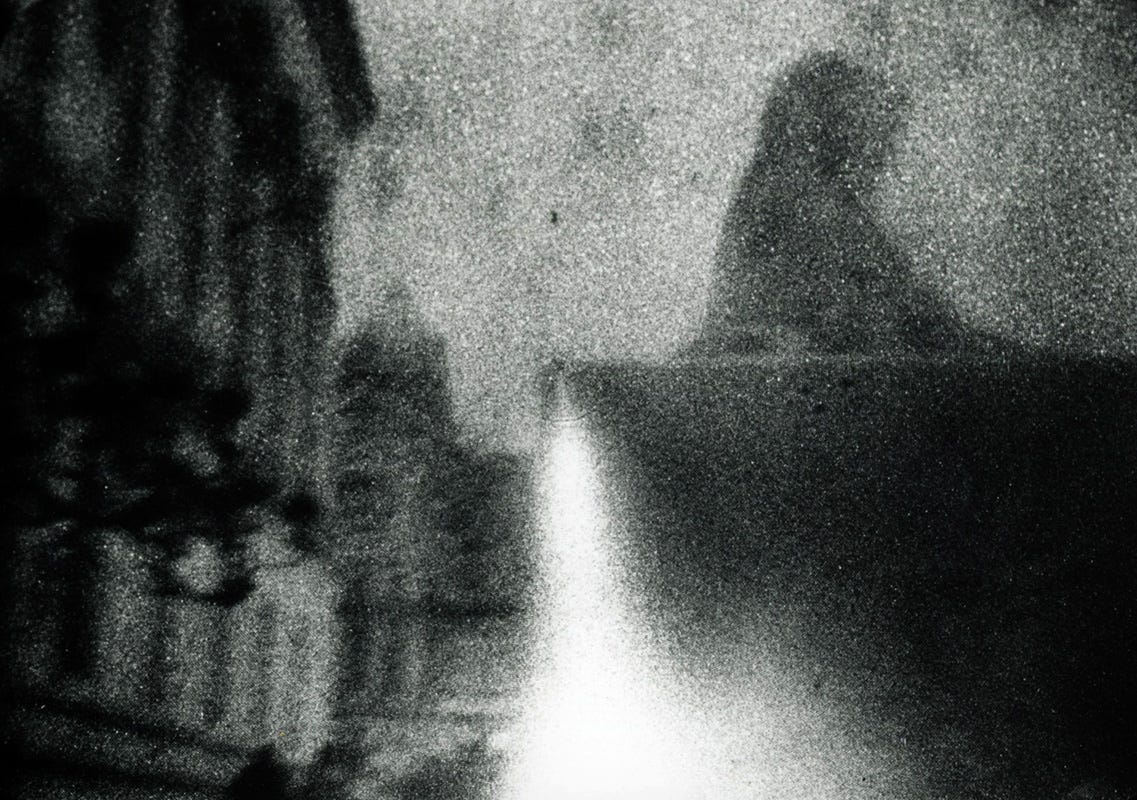
I pushed reality by rephotographing images off the screen of the Goko editing machine in my Super 8 filmmaking class. By cranking the film through the editor, time was elastic. It could go backwards or forwards or stop, allowing me to enlarge each frame, composed by a pointillist series of dots. I created short stories with this series of images and called them spells in reference to the magical world they invoked.
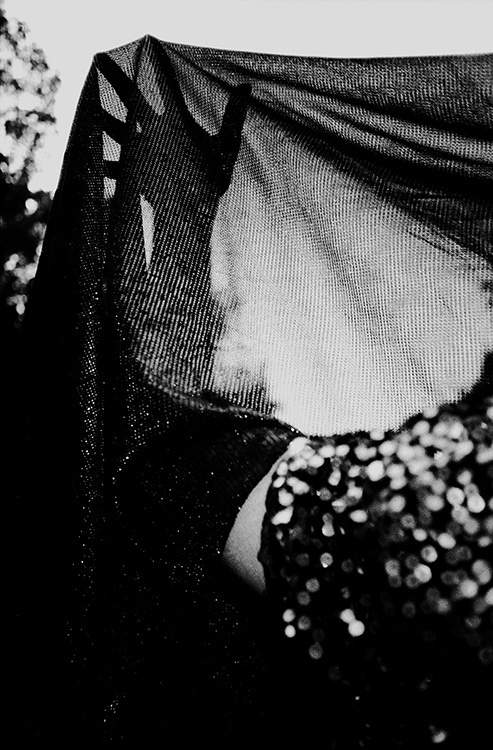
I'm inspired by the spirit photography of the late 1800s. These images fascinate me with their Victorian stiffness interrupted by streams of ectoplasm. Although many of those images were created through darkroom tricks, they're no less phantasmagoric. That era also put into focus the concept of the waking Dream, as articulated by Edgar Allen Poe and Mary Shelley. Their writing, though florid and fantastical, explored the idea of blurring an inner and outer reality, similar to the one I sought to invoke with my image making experiments.
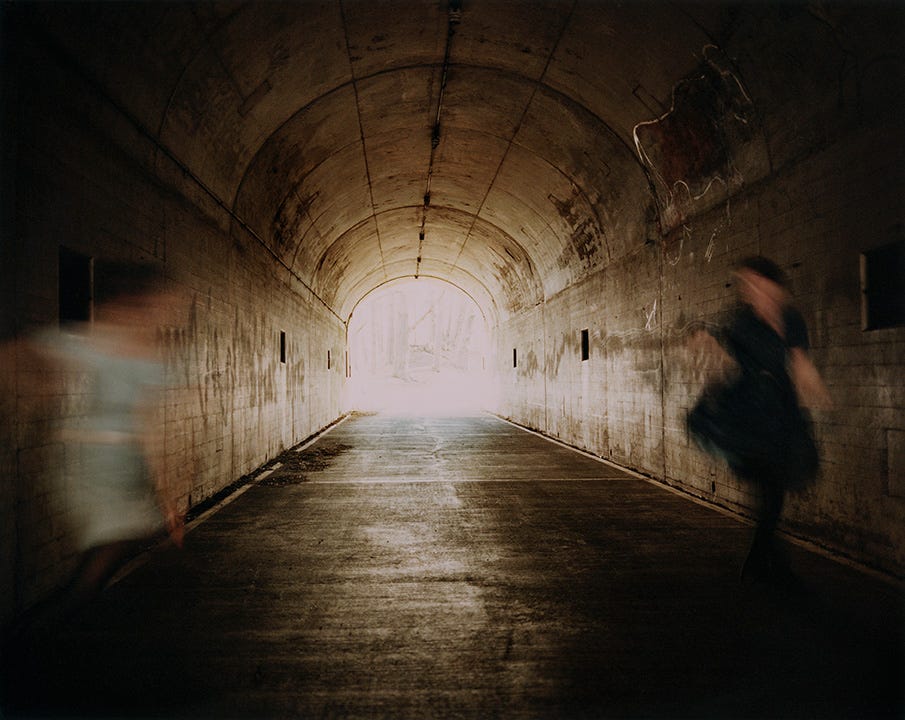
These influences inspired my attempts to recreate the imagery of the subconscious and led me to create the Dream series of The Other Side of Mirror. As a child of the 60's and 70’s, expansion of the mind and consciousness contribute to my worldview. I'm also aware that gravitating towards an imaginary world may be as much about escapism as it is about expansion, especially in these challenging times. But the world has always been a dark place and I hope the images of my dream world will provide a glimpse into something mysterious and sublime, in contrast to the cruel reality we often find ourselves in. That's my hope for the journey of The Other Side of the Mirror and its potential as an entry point into the world of infinite possibility, experienced mainly in dreams.